Sharia Arfin Tanim
Welcome
I am a prospective Master's student. Please feel free to explore my portfolio to learn more about my academic and professional achievements.
Note: This project portfolio highlights a curated selection of my projects. It will be periodically updated to include my most recent work and endeavors.
Project 1
Prediction of Vehicle CO2 Emissions with eXplainable AI Integration for Environmental Sustainability

Brief Description
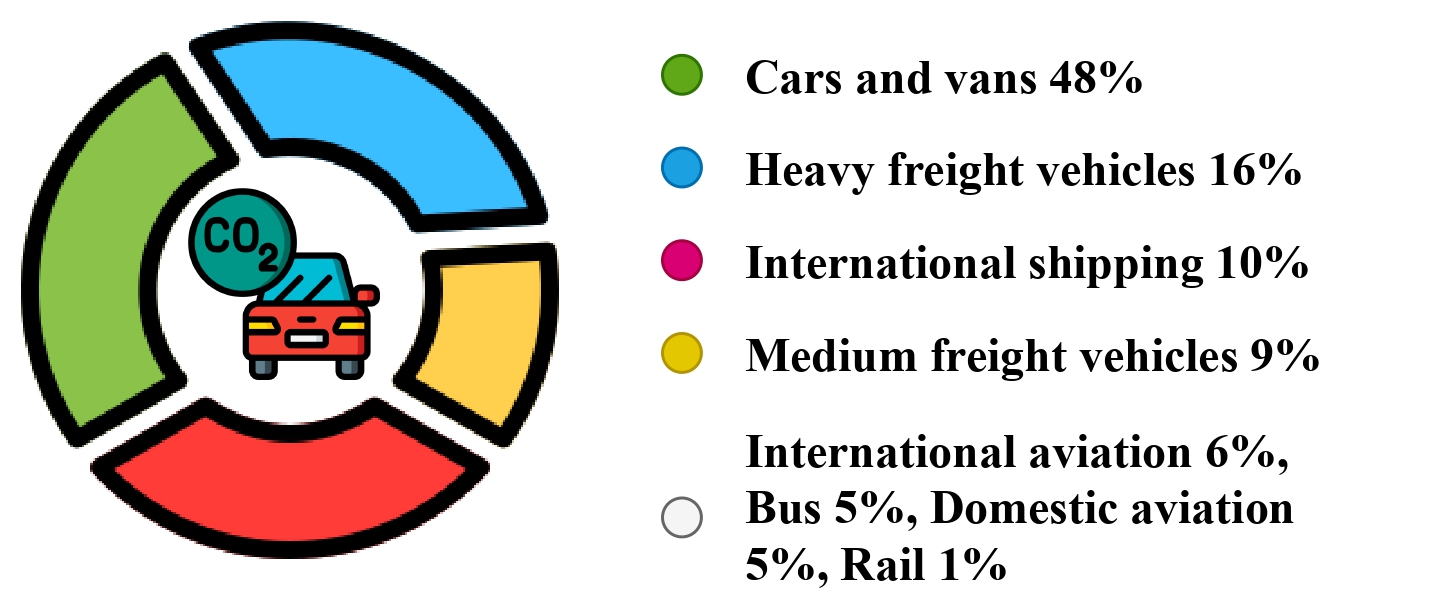
In response to the growing environmental concerns associated with CO2 emissions from transportation. This project developed CarbonMLP, a deep learning model designed to predict vehicle CO2 emissions based on various vehicle attributes such as engine type, fuel efficiency, weight, and other specifications. The model not only provides accurate predictions but also integrates explainable AI (XAI) techniques to enhance transparency, interpretability. This approach make it easier to understand the driving factors behind CO2 emissions. This project aims to support environmental sustainability by providing a powerful tool to identify and mitigate high CO2 emissions from vehicles.
Relevant Background
Transportation is one of the largest contributors to greenhouse gas emissions, primarily through the emission of carbon dioxide (CO2). CO2 is a major driver of global warming, resulting in an increase in average global temperatures and contributing to extreme weather events such as floods, heatwaves, rising sea levels, and more. Vehicle emissions play a significant role in this, with high-performance vehicles often producing more CO2 than fuel-efficient ones.
By accurately predicting vehicle CO2 emissions, it becomes possible to:
- Track pollution sources: Understanding which vehicle models contribute the most CO2 allows for more targeted interventions and regulations.
- Encourage green vehicle adoption: Governments and consumers can identify fuel-efficient vehicles, thus promoting cleaner alternatives.
- Optimize vehicle usage: For businesses managing fleets, accurate CO2 predictions help in planning for more eco-friendly fleet management.
This project utilizes a dataset from the Canadian government's open data to analyze the CO2 emissions of different vehicles and use deep learning techniques to predict their emissions. The approach integrates both machine learning and deep learning models to provide robust predictions that can drive actionable insights for environmental policies, regulations, and consumer decisions.
Sustainability Impacts and CO2 Emission Analysis
In the context of sustainability, this project goes beyond just predicting CO2 emissions. It provides actionable data that can help shape a greener future. Here's how the project contributes to sustainability:
- Promoting Clean Energy Use: By analyzing the relationship between vehicle attributes (e.g., engine type, fuel consumption, weight) and CO2 emissions. The project provides data to help consumers make eco-friendly decisions when purchasing a vehicle. Fuel-efficient vehicles, or electric vehicles (EVs), emit significantly less CO2, thus helping to reduce the overall carbon footprint.
- Policy Design and Regulation: Governments can use these predictions to design carbon taxation policies or emission standards for vehicles. With accurate prediction tools, governments can identify high-emission vehicles and enforce stricter regulations for these vehicles, promoting the transition to more sustainable transportation.
- Carbon Footprint Reduction: For organizations managing fleets, being able to predict CO2 emissions allows for more strategic planning. Fleet managers can replace old, high-emission vehicles with energy-efficient or electric vehicles, reducing their fleet's overall carbon footprint. This has direct implications for improving a company's sustainability credentials.
- Environmental Impact Forecasting: The model enables long-term forecasting by simulating various scenarios where different kinds of vehicles are introduced into the market. The results from these simulations can inform future decisions on how to reduce overall transportation emissions. For example, governments can forecast the impact of transitioning from conventional fuel cars to electric vehicles (EVs) on national CO2 levels.
Skills Required
- Technical Skills:
- Python, TensorFlow, Keras for deep learning implementation
- SHAP (Shapley Additive Explanations) for model interpretability
- Data preprocessing and feature engineering for clean data input
- Methodologies:
- Multilayer Perceptron (MLP) for deep learning model
- Hyperparameter tuning to optimize model performance
- Explainable AI (XAI) using SHAP to improve model transparency
- Statistical analysis for feature importance and CO2 emission forecasting
My Contribution
As the project leader, I was responsible for overseeing all stages starting from data collection and preprocessing to model building and evaluation. I developed the CarbonMLP deep learning model using the Multilayer Perceptron (MLP) architecture and optimized it through hyperparameter tuning to ensure accurate predictions of CO2 emissions. Additionally, I contributed to building the project proposal and conducted the analytical work to evaluate the sustainability impact of our model's predictions by ensuring the results align with long-term environmental goals.
Achievements/Results
- Model Accuracy: Achieved a high R-squared value of 0.9957, indicating that the model explains 99.57% of the variance in CO2 emissions.
- Mean Squared Error (MSE) of 0.0001, showing excellent predictive performance.
- Explainability: Integrated SHAP to provide feature importance insights, allowing us to explain which factors contribute most to CO2 emissions. This insight supports the decision-making process for reducing emissions.
- Environmental Impact: The model was designed to help predict and reduce CO2 emissions, which will have a positive long-term effect on environmental sustainability by encouraging the use of more eco-friendly vehicles.
Tools/Technologies Used
- Python, TensorFlow, Keras for deep learning model development
- SHAP for explainability
- Jupyter for interactive development
- Matplotlib, Seaborn for visualizations
- Pandas and NumPy for data manipulation and preprocessing
Note: This project has already been published in a scientific journal. You can access it through the following link: Deep learning model based prediction of vehicle CO2 emissions with eXplainable AI integration for sustainable environment. Thank you for your interest!
Project 2
Generative AI for Surface-Level Fire Detection Using Text-to-Image Stable Diffusion

Brief Description:
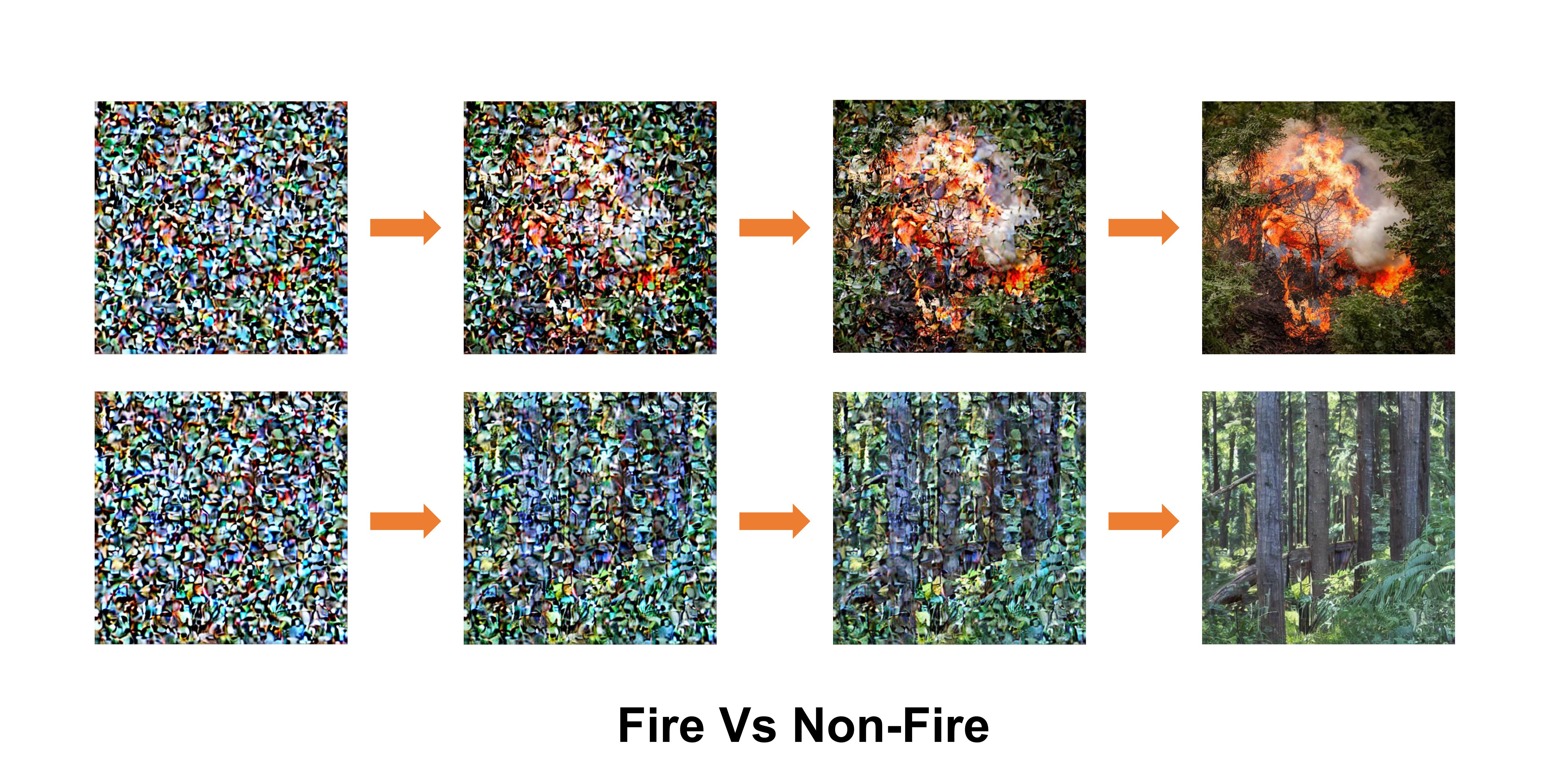
Develop a Generative AI Image Augmentation Framework (GAII) to address the limitations of small wildfire datasets. Create synthetic datasets using Stable Diffusion for enhanced classification and accurate detection of surface-level fires. Build a Multimodal Deep Belief Network (DBN) to classify wildfire cases with high accuracy.
Sustainability Impacts:
Balances datasets, enabling underrepresented regions or scenarios to be equally represented in training data. The model effectively addresses challenges posed by limited datasets by generating synthetic images that closely mimic real-world scenarios. Environmental challenges like flood monitoring, deforestation detection, and air pollution visualization, fostering innovation in climate-tech solutions.
Skills Required:
- Technical Skills: Python, Hugging Face Diffusers Library for generative AI, SHAP, Grad-CAM, and LIME for explainability.
- Methodologies: Multimodal Deep Belief Network (DBN) for classification, Generative AI image augmentation for dataset balancing, Image quality was assessed using PSNR, SSIM, and LPIPS.
My Contribution:
Conducted performance evaluations on synthetic and real datasets. Drafted comprehensive sustainability impact analyses aligning project results with environmental protection objectives. Additionally, conceptualized and assessed the feasibility of the project also ensuring its alignment with both technical and ecological viability.
Achievements/Results:
Demonstration of the scalability potential for Generative AI to address data scarcity in global wildfire management.
Tools/Technologies Used:
- Generative AI: Stable Diffusion, Hugging Face Diffusers Library
- Deep Learning Frameworks: PyTorch, TensorFlow.
- XAI Libraries: SHAP, Grad-CAM, LIME
- Visualization Tools: Matplotlib, Seaborn.
Note: This project is under review in a scientific journal. As per the journal's policy I cannot share resources until the official release. Thank you for your understanding.
Project 3
Secure Federated Learning for Parkinson's Disease: Non-IID Data Partitioning and Homomorphic Encryption Strategies
Brief Description:
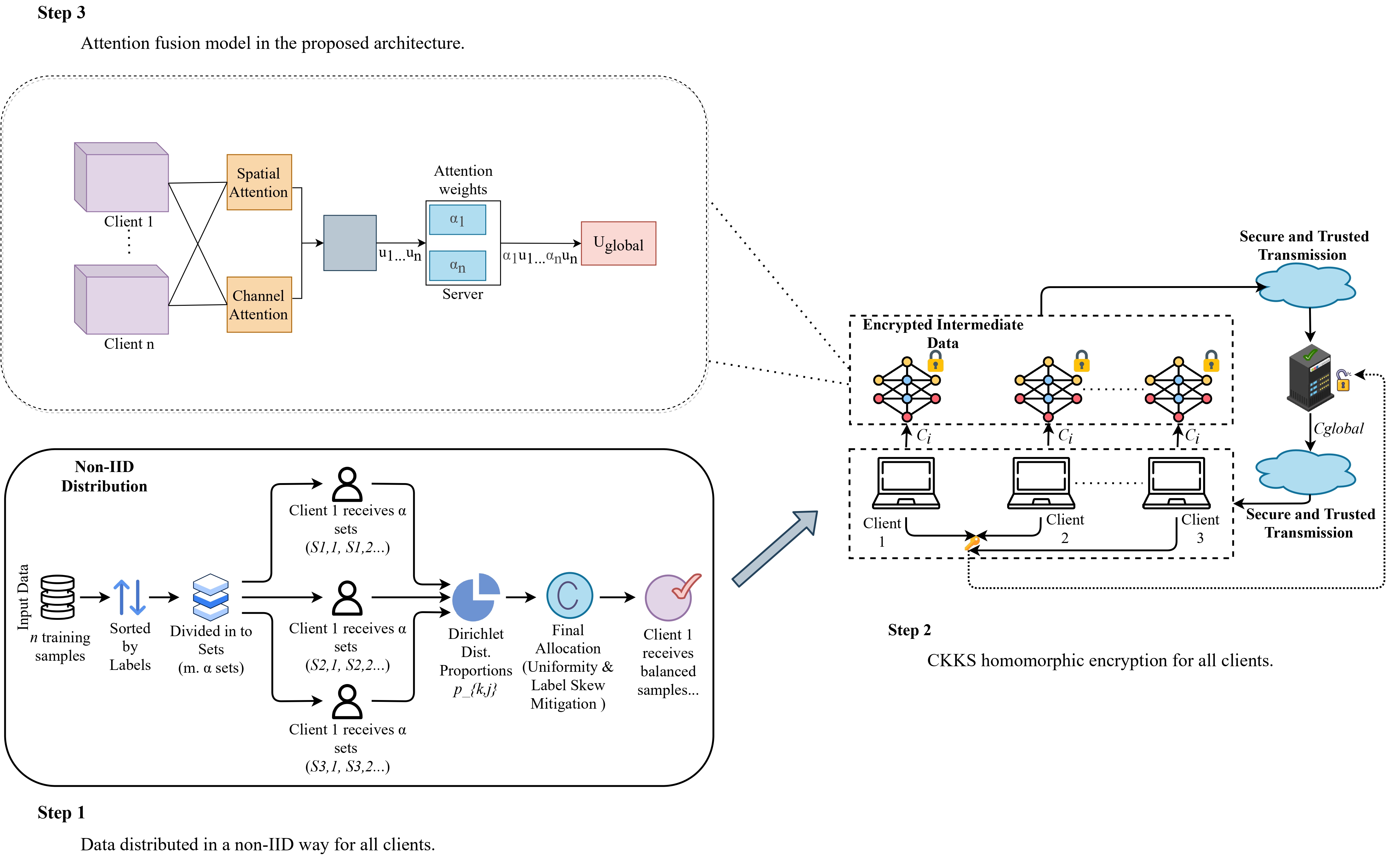
In this project, we explore methods to improve both privacyterms of federated learning (FL) models by implementing two key techniques: homomorphic encryption and attention-based fusion. In FL it involves client-side training of models using multiple users' data which suffers from drawbacks such as privacy issues and the variability of data across different users (data heterogeneity). To address these challenges, we introduced a Secure Federated Learning (SFL) algorithm that avoids problems associated with Non-Independent and Identically Distributed (Non-IID) data by introducing a proposed partitioning method for datasets. Then, we used homomorphic encryption to securely sum encrypted model parameters. Additionally, attention-based fusion techniques were applied to boost model accuracy and robustness.
Relevant Background:
Parkinson's disease (PD) is a progressive neurological disorder thats why detecting its progression early can significantly impact treatment for patients. FL offers a privacy-preserving framework for training machine learning models on distributed data, but the challenge arises from the variability in data (heterogeneity) and the need to protect sensitive patient data. In this study, we handle the problem of Non-IID data in federated learning using homomorphic encryption and attention-based fusion techniques by demonstrating the potential for scalable and secure learning in healthcare.
Sustainability Impacts and Data Security:
This project addresses two major concerns: improving model accuracy while preserving privacy. The use of homomorphic encryption ensures that sensitive health data remains secure, while attention-based fusion improves model robustness, leading to better disease progression predictions. This approach can be scaled to other healthcare applications where data security is a priority, promoting both privacy and sustainability in data usage.
Skills Required:
- Technical Skills: Python, PySyft, PyTorch, Homomorphic Encryption, Federated Learning Techniques
- Methodologies: Federated Learning, Homomorphic Encryption, Attention-Based Fusion, Secure Model Aggregation
My Contribution:
Involving developed the Secure Federated Learning algorithm to address the challenges of Non-IID data concepts and implemented the homomorphic encryption strategy for secure model training. Furthermore, I evaluated the model's performance and analyzed the results, focusing on ensuring privacy and efficiency in clinical applications.
Achievements/Results:
- Significant improvement in robustness compared to traditional methods.
- Successful encryption and summation of model parameters without compromising performance.
- Validation of the model's reliability and applicability in clinical settings.
- Demonstrated the feasibility of federated learning in sensitive data environments particularly in healthcare.
Tools/Technologies Used:
- Python, PyTorch for deep learning
- PySyft for federated learning
- Homomorphic Encryption libraries for secure data processing
- Matplotlib, Seaborn for data visualization
Note: This project has already been published in a scientific journal. You can access it through the following link: Secure Federated Learning for Parkinson's Disease: Non-IID Data Partitioning and Homomorphic Encryption Strategies. Thank you for your interest!
Project 4
Deep Learning-Based Detection and Classification of Dental Diseases Using Annotated Panoramic Radiographs
Brief Description:
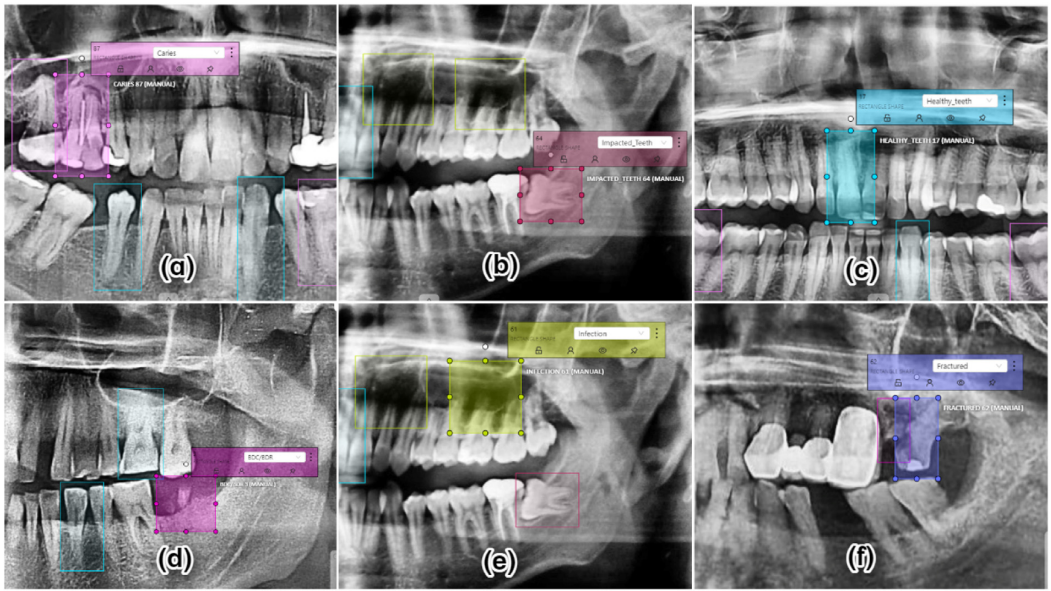
This project presents the development of a benchmark dental radiograph dataset designed to facilitate deep learning-based detection and classification of dental diseases. A total of 232 high-resolution panoramic dental radiographs were collected from three private clinics in Dhaka, Bangladesh, with the support of experienced dental practitioners. The images were classified into six diagnostic categories: healthy teeth, caries, impacted teeth, infections, fractured teeth, and broken-down crowns/roots (BDC/BDR). To enhance image quality and model performance, Contrast-Limited Adaptive Histogram Equalization (CLAHE) and multiple data augmentation techniques were applied. All images were annotated using the CVAT tool and validated by expert dentists to ensure high labeling accuracy. The resulting dataset serves as a reliable resource for training AI models in dental disease recognition.
Relevant Background:
Dental panoramic radiography is a common diagnostic tool used by dentists to assess oral health and identify conditions such as caries, impacted teeth, infections, fractures, and structural decay. However, manual interpretation is time-consuming and prone to variability. The growing demand for AI-assisted diagnosis in dentistry necessitates reliable and publicly available datasets. This project addresses this gap by creating a diverse and high-resolution dental image dataset annotated by professionals, enabling robust model training for accurate and automated disease detection.
Sustainability Impacts:
This project aligns with goals in public health, technological innovation, and healthcare equity by contributing a scalable solution to improve diagnostic speed and accuracy in dental practices, our model enables:
- Improved Early Diagnosis: Automated tools help detect dental diseases at early stages, reducing the need for invasive treatment
- Access to Care: Enables remote screening and diagnosis in underserved areas where dentists are scarce
- AI Benchmarking: Provides a clean, standardized dataset for training and comparing AI models
- Clinical Decision Support: Enhances the efficiency and consistency of dental diagnostics
Skills Required:
- Technical Skills: Python, OpenCV, TensorFlow, Keras, Roboflow, CVAT, data labeling and preprocessing
- Methodologies: Object detection (YOLO format), multiclass classification, image enhancement (CLAHE), data augmentation, model validation
My Contribution:
Led the development of the deep learning architecture, focusing on creating a model that could effectively integrate multispectral satellite imagery with urban infrastructure data. Designed and implemented the data preprocessing pipeline for handling diverse data sources. Conducted validation studies comparing model predictions with ground-based temperature measurements from weather stations across three major cities, ensuring the model's applicability across different urban contexts.
Achievements/Results:
- Developed a publicly available benchmark dataset of 232 panoramic dental radiographs with 1204 labeled instances across six disease classes
- Achieved object detection performance with 96.03% precision, 86.53% recall, and 93.54% mAP@50
- Implemented image enhancement using CLAHE, improving radiograph clarity and diagnostic quality
- Annotated all images using CVAT and validated by dental experts with over 16 and 32 years of experience
- Created a structured dataset directory for both object detection and classification tasks, split into training, validation, and test sets
Tools/Technologies Used:
- Deep Learning: TensorFlow, Keras for model training and classification
- Image Processing: OpenCV, CLAHE for contrast enhancement
- Annotation Tools: CVAT (Computer Vision Annotation Tool) for labeling radiographs
- Data Augmentation: Roboflow for rotation, flip, shear, and exposure transformations
- Visualization: Matplotlib for training metrics and image analysis visualization
Note: This project has already been published in a scientific journal. You can access it through the following link: A comprehensive dental dataset of six classes for deep learning based object detection study. Thank you for your interest!
Project 5
AquaSense: IoT-Based Water Quality Monitoring with Blockchain Integration for Data Integrity
Brief Description:
AquaSense is an integrated IoT and blockchain solution designed to monitor, analyze, and secure water quality data from freshwater ecosystems. The system employs distributed sensor networks to collect real-time measurements of key water quality parameters including pH, dissolved oxygen, turbidity, temperature, and the presence of specific contaminants. Data is transmitted to a cloud platform where advanced machine learning algorithms detect anomalies and predict potential water quality deterioration. To ensure data integrity and transparency, the system implements a permissioned blockchain architecture that creates an immutable record of all measurements, making the data trustworthy for regulatory compliance and environmental research.
Relevant Background:
Access to clean water is a fundamental human right and essential for ecosystem health, yet water sources worldwide face increasing threats from pollution, climate change, and industrial activities. Traditional water quality monitoring is often labor-intensive, intermittent, and susceptible to data manipulation or errors. This project addresses these challenges by creating a continuous, tamper-proof monitoring system that can detect contamination events in near real-time, while maintaining an auditable record of all water quality data.
Sustainability Impacts:
AquaSense contributes to environmental sustainability through:
- Early Contamination Detection: Real-time monitoring enables rapid response to pollution events, minimizing ecological damage
- Resource Optimization: Targeted water treatment based on actual conditions rather than predetermined schedules
- Long-term Ecosystem Analysis: Creating comprehensive datasets for understanding aquatic ecosystem dynamics
- Regulatory Compliance: Providing immutable evidence for environmental regulations enforcement
- Community Empowerment: Increasing transparency by making water quality data publicly accessible
Skills Required:
- Technical Skills: IoT sensor programming, Embedded systems development, Blockchain implementation (Hyperledger Fabric), Cloud architecture, Machine learning for anomaly detection
- Methodologies: Time series analysis, LSTM networks for predictive modeling, Consensus mechanisms for blockchain validation
My Contribution:
Designed the blockchain architecture for data integrity verification and developed the smart contracts governing data validation and access control. Created the anomaly detection algorithms that process incoming sensor data to identify abnormal water quality patterns. Coordinated field testing with environmental agencies to validate system performance under various conditions and optimized the energy efficiency of the sensor nodes to enable long-term deployment in remote locations.
Achievements/Results:
- Successfully deployed a network of 50+ sensor nodes across three watershed areas
- Achieved 94% accuracy in detecting contamination events with a false positive rate below 3%
- Reduced anomaly detection latency to under 15 minutes from sensor measurement
- Implemented a tamper-proof blockchain record with over 10 million data points securely stored
- Developed a public-facing dashboard with over 2,000 monthly active users from environmental agencies and research institutions
Tools/Technologies Used:
- Hardware: Arduino-based custom sensor arrays, LoRaWAN for long-range data transmission
- Blockchain: Hyperledger Fabric for permissioned blockchain implementation
- Cloud: AWS IoT Core for device management, Lambda for serverless processing
- Machine Learning: TensorFlow for anomaly detection and water quality prediction
- Visualization: Grafana for real-time dashboards and alerts
Note: AquaSense has been selected for extended deployment by the Environmental Protection Agency as part of their next-generation water monitoring initiative. A detailed technical white paper on the system architecture and implementation is available upon request.
Contact
Let's Connect
Thank you for exploring my project portfolio. I am always open to discussing research collaborations, academic opportunities, or questions about my work.
You can reach me through the following channels:
I am currently seeking opportunities for graduate studies and research collaborations in the fields of artificial intelligence, sustainability technologies, and healthcare applications of machine learning.
For academic inquiries or project collaboration proposals, please include relevant details in your message to expedite the discussion process.